We work with your business. Not just your brief.
The software a business runs on touches everyone — your team, your customers, how you get paid, and what you can see. So a change is never just a technical decision.
That’s why we start by understanding the business, not the brief.
We agree what matters, sort out priorities together, and then stay with you — keeping the work tied to the outcome you’re actually after.

Our working process
01 · Understand the business
First, we understand what matters.
Before we recommend anything, we dig into the real problem — the people it affects, the systems already in play, and what a better outcome actually looks like for you.
For an existing application, we review its code, hosting, access and documentation before agreeing what we can look after. For a new build, we map the workflow and agree how we will test it together.
02 · Agree what to tackle first
Clear priorities, agreed up front.
Not everything needs fixing at once.
We help you work out what matters most, who’s responsible for what, and what can realistically get done — so effort goes where it helps the business most.
03 · Build & improve
Solutions that grow with the business.
We build, connect, configure and improve, guided by the priorities we agreed. As things change, we review what’s needed and adjust the plan.
At launch, we walk your team through the application and test the agreed workflow together. Where the project calls for it, we provide guidance or training. After launch, we monitor agreed systems, fix issues and prioritise improvements with you.
04 · Keep it visible
You always know what’s going on.
You can see what we’re working on at any time. We keep a shared list and send a plain-language update: what changed, how we checked it, and what’s next.
Where there are real numbers to look at, we go through them with you and use what we learn to decide the next improvement — not to pad out a report.
One partnership. Continuous progress.
We work primarily through monthly managed partnerships covering agreed expertise, time, development capacity and ongoing responsibilities. Rather than invoicing separately for every in-scope improvement, we establish priorities, report progress and help your technology evolve with the business.
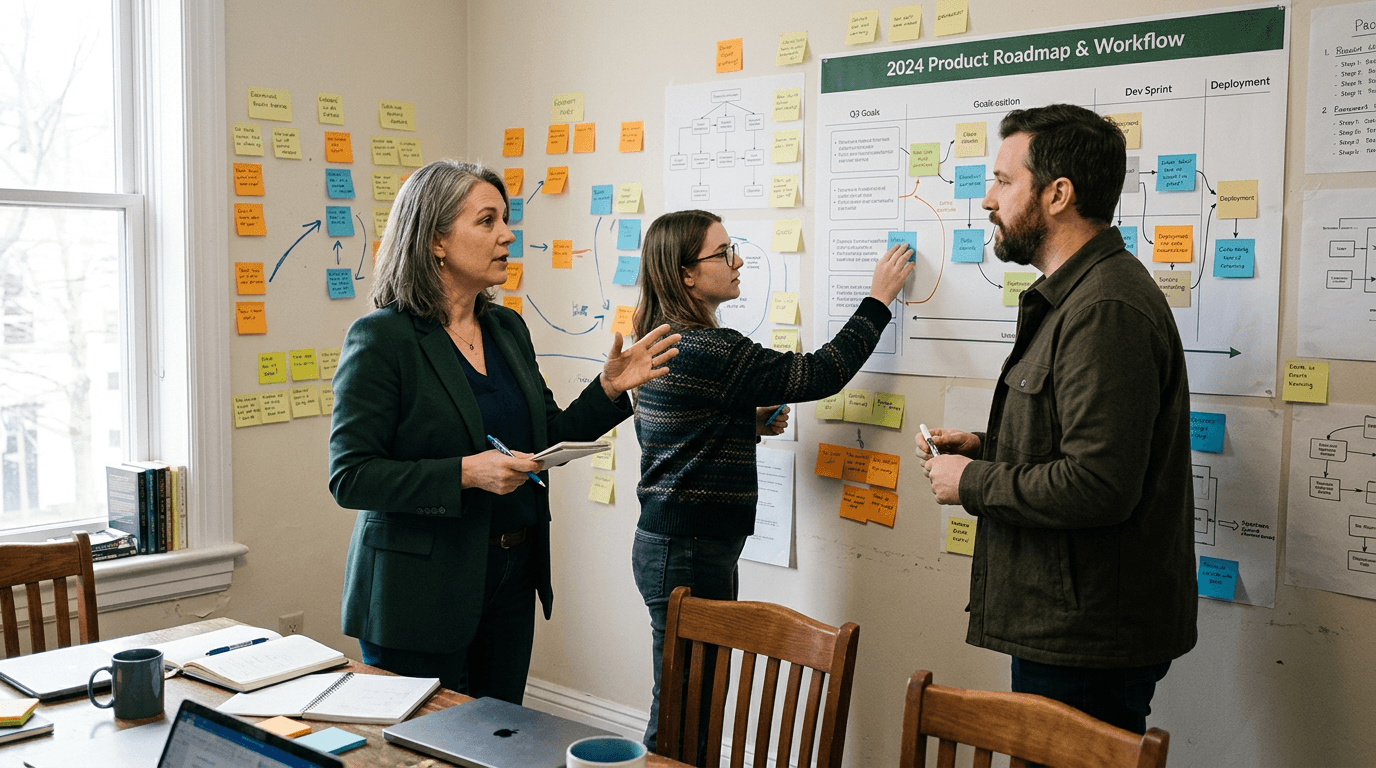

Our agreements define scope and commitments clearly: the capacity reserved for you, what we are responsible for and the response you can expect. It is not unlimited development. When priorities change, we agree together what moves up and what waits.
That continuity is the point. The people who built your system are the ones who look after it, and you deal directly with the person doing the work.
And everything stays yours. The code, the accounts and the documentation are yours to keep, with no lock-in.
You should never have to wonder what your technology partner is doing.
We think being able to see what’s going on is the foundation of a good working relationship.
You should always know what we’re working on, why it matters, what’s done and what’s still open.
We say things plainly, flag the limits honestly, and keep the work tied to what your business actually needs.
Trust comes from work being visible and expectations being clear.
What a month of work looks like.
Each month you receive a short, documented review: completed work, time and capacity used, system health, support issues, results where they can be measured, open risks and the priorities for the month ahead.
Work that doesn’t serve an agreed objective gets questioned, not just recorded.
One month of support & maintenance
Fixed
Paid customers locked out of their course
Found the enrolments that failed after payment, restored access for everyone affected, and confirmed with your team that they can now sign in.
Changed
First lesson now easy to find
Added the login steps and a direct link to lesson one in the sign-up email. Tested it end to end with a fresh account.
Needs your call
Alert when a payment clears but access fails
Ready to switch on. We just need to know who on your team should get the alert so this never silently breaks again.
We’d suggest next
Win back customers who never start
Some people create an account and never open a course. Worth looking at where they stop, and whether one short reminder email brings them back.
Practical questions about working together.
Can you work on an application someone else built?
Yes, subject to a review. We look at the code, hosting, access, documentation and known issues, then agree what we can support and what needs attention first. You do not need to assume a rebuild is the answer.
How will our team know what has changed?
We keep a shared list of priorities and explain what changed, how it was checked and what still needs attention. At launch, we walk your team through the agreed workflow and test it together.
Do we keep control of our application?
Your code, accounts and documentation remain yours. We agree access and responsibilities so your team knows where the application runs and how it is looked after.
What should we bring to the first conversation?
Tell us what your team needs to achieve, what is getting in the way and which systems you use today. A short description of the workflow is enough to start; we can identify what needs a closer review together.
Want a technology partner who sticks around?
Tell us what you’re dealing with — something broken, something to build, or an agency that went quiet — and we’ll tell you straight where we’d start.